BORAMA, SOMALILAND – In a landmark event that signals a new era for higher education in the region, Amoud University has officially launched the Borama Amoud Household Development Assessment (BAHDA-2026). This ambitious initiative, held under the theme “From Data to Discovery,” marks the university’s transition into a research-intensive institution dedicated to societal transformation.
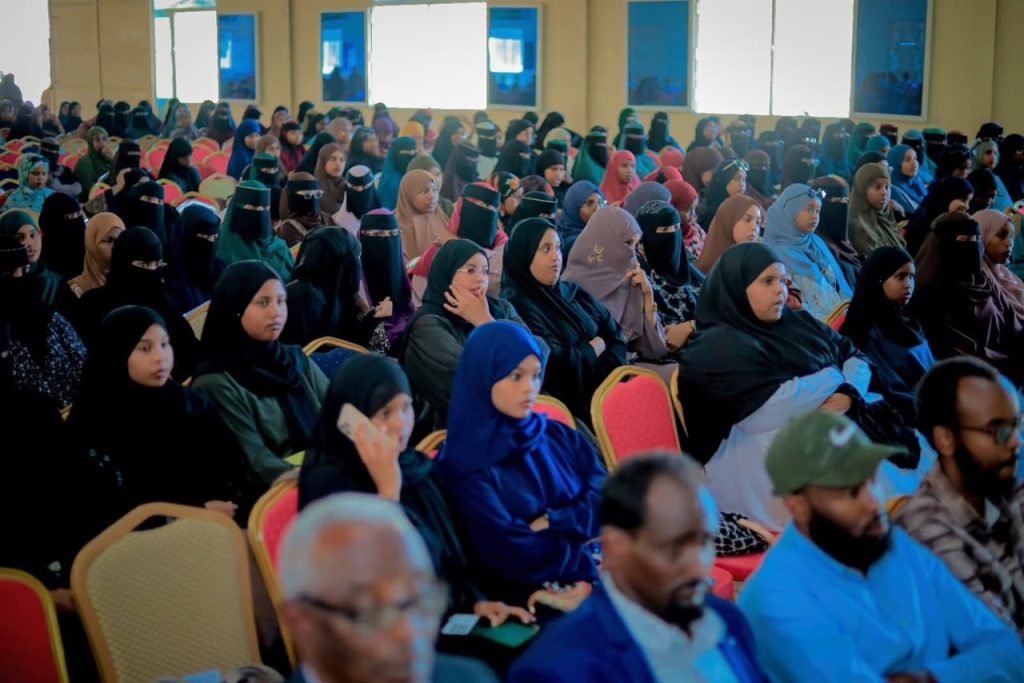
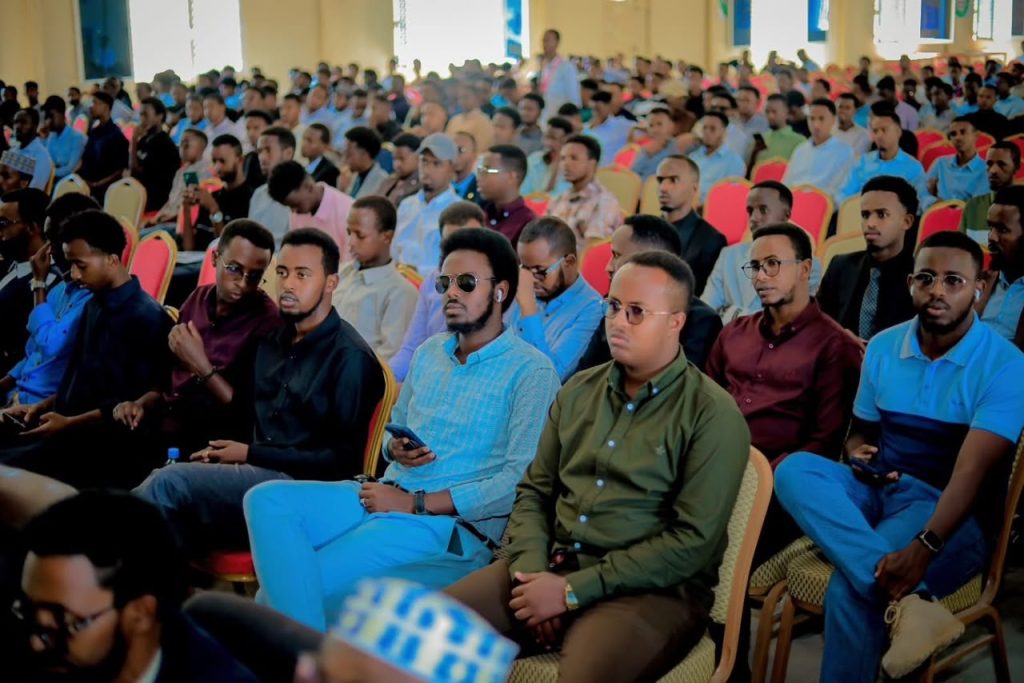
The launch ceremony brought together the university leadership, 900 senior students, and government dignitaries to witness the unveiling of a framework designed to bridge the gap between academic theory and national development.
1. Presidential Keynote: A Commitment to the Community
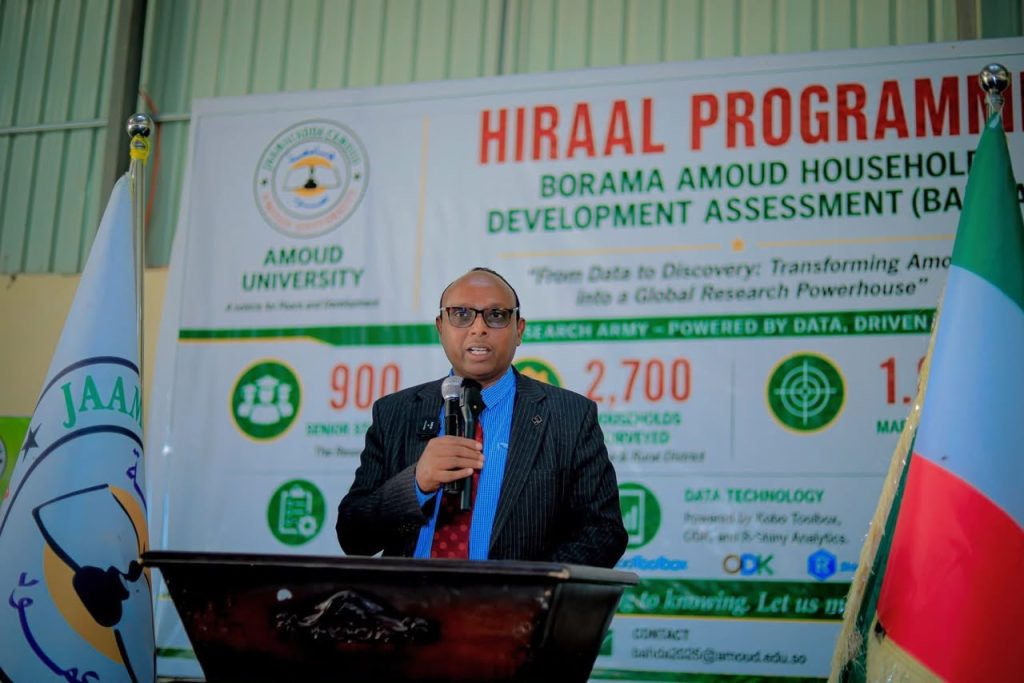
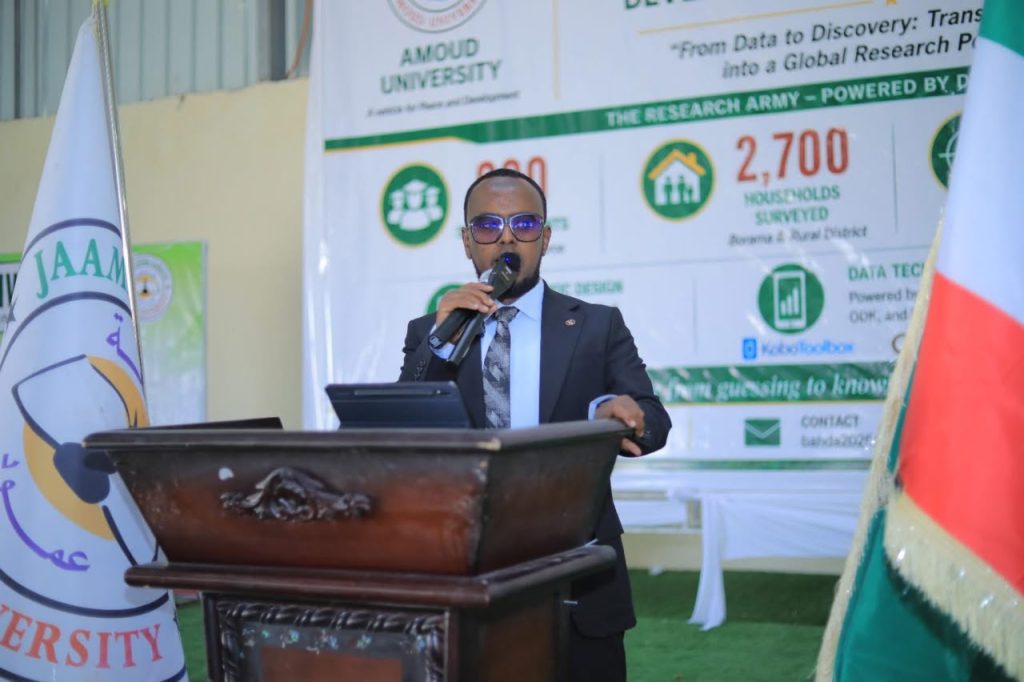
Opening the event, the President of Amoud University, Prof. Dr. Mohamed Muse Jibril, officially inaugurated the BAHDA-2026 survey. He emphasized that this project is a core manifestation of the university’s duty to serve its community.
“BAHDA-2026 is a research project through which the university serves its people by closely examining the realities of the families living in Borama and surrounding areas,” Dr. Jibril stated. He highlighted that approximately 900 students would be deployed to collect accurate data from 2,700 households, ensuring that future policies are built on a foundation of scientific evidence.
2. Elevating Standards: Regional and Global Benchmarking
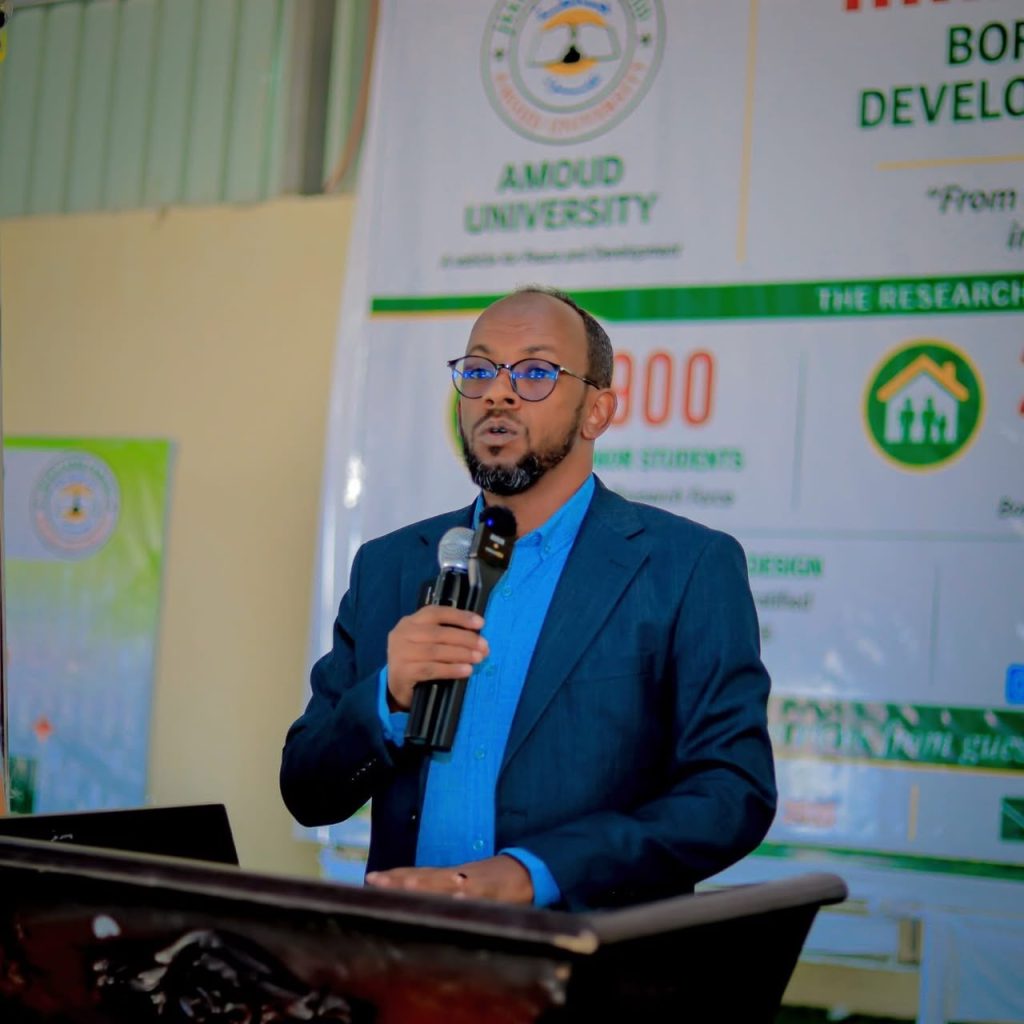
Mr. Mukhtar Abdi Omer, Director of Academic Affairs, placed the initiative within a broader geographical context. He noted that the project is a response to the historical challenges faced by universities in the Horn of Africa regarding research sustainability.
“Drawing insights from recent surveys of higher education institutions in the Horn of Africa, we recognize the need to elevate our academic output,” Mr. Mukhtar remarked. “By launching this structured initiative, Amoud University aims to bridge these gaps and participate more actively in the global research community.”
3. Strategic Vision: Transitioning to Research-Intensive Excellence
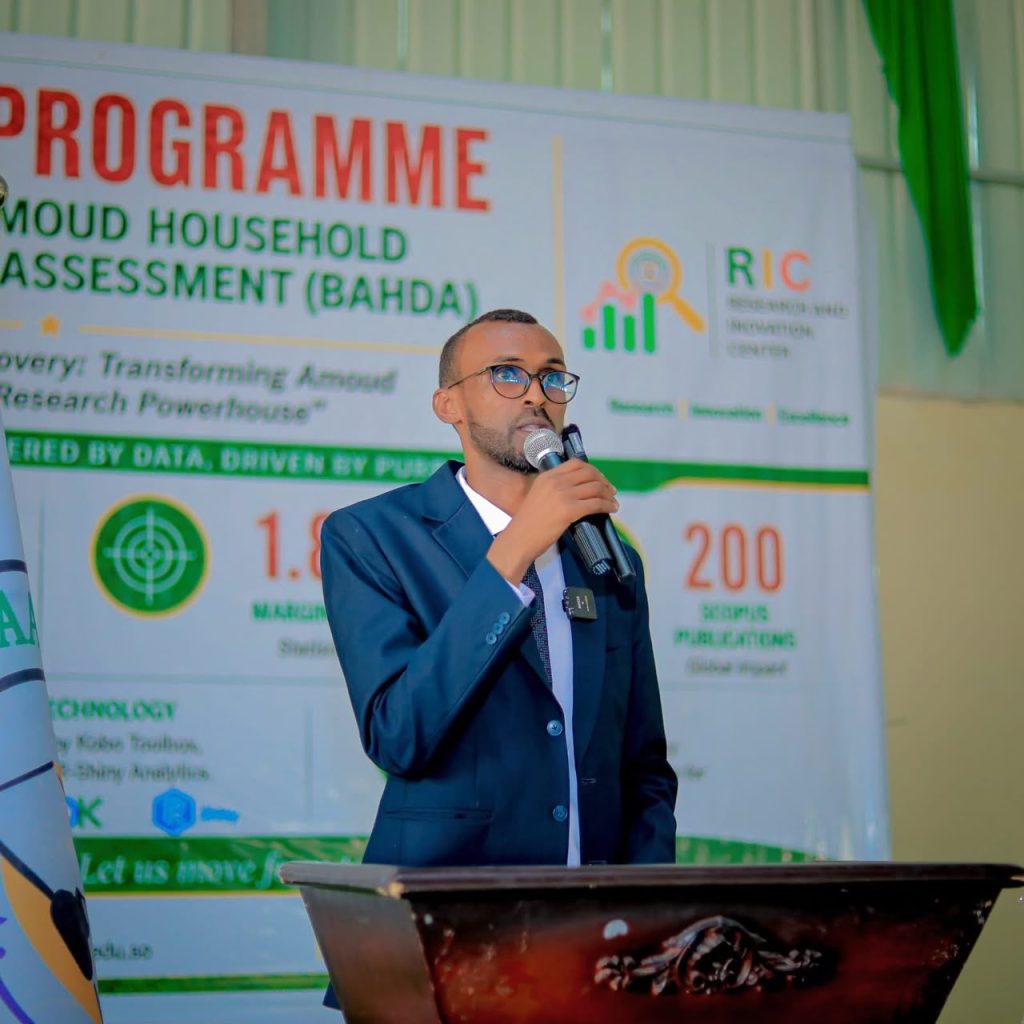
Providing the technical roadmap, Dr. Abdisalam Hassan Muse, Director of the Research and Innovation Center (RIC), introduced BAHDA-2026 as a pillar of the university’s long-term strategy.
According to Dr. Abdisalam, the initiative is designed to build institutional capacity and foster innovation. “Our goal is to transition Amoud University toward a research-intensive model,” he explained. “We are focused on generating localized knowledge that provides actionable solutions to the specific challenges faced by our society.”
4. The HIRAAL Program: Rigor, Ethics, and Practical Impact
Closing the strategic presentations, Dr. Mukhtar Ahmed Omer, Senior Research Advisor to Amoud University, introduced the HIRAAL Program, under which BAHDA-2026 serves as the inaugural project. He emphasized that HIRAAL is built on the pillars of academic rigor and ethical standards.
“BAHDA is not merely an academic exercise; it is a practical evidence platform,” Dr. Mukhtar Ahmed asserted. He explained that the data gathered would bridge the gap between community needs and policy-making, assisting government entities and local stakeholders in identifying service gaps and making informed decisions for the development of Borama and the wider region.
A Global Contribution
By aligning with the Somaliland National Development Plan (NDP-III), the AU Agenda 2063, and the UN Sustainable Development Goals (SDGs), Amoud University is positioning itself as a powerhouse of knowledge in the Horn of Africa.
As the 900 student enumerators prepare to enter the field, the launch of BAHDA-2026 stands as a testament to Amoud University’s motto: A Tradition of Innovation and Excellence.
#AmoudUniversity #BAHDA2026 #HIRAAL #RIC #Borama #Somaliland #SDGs #GlobalResearch